

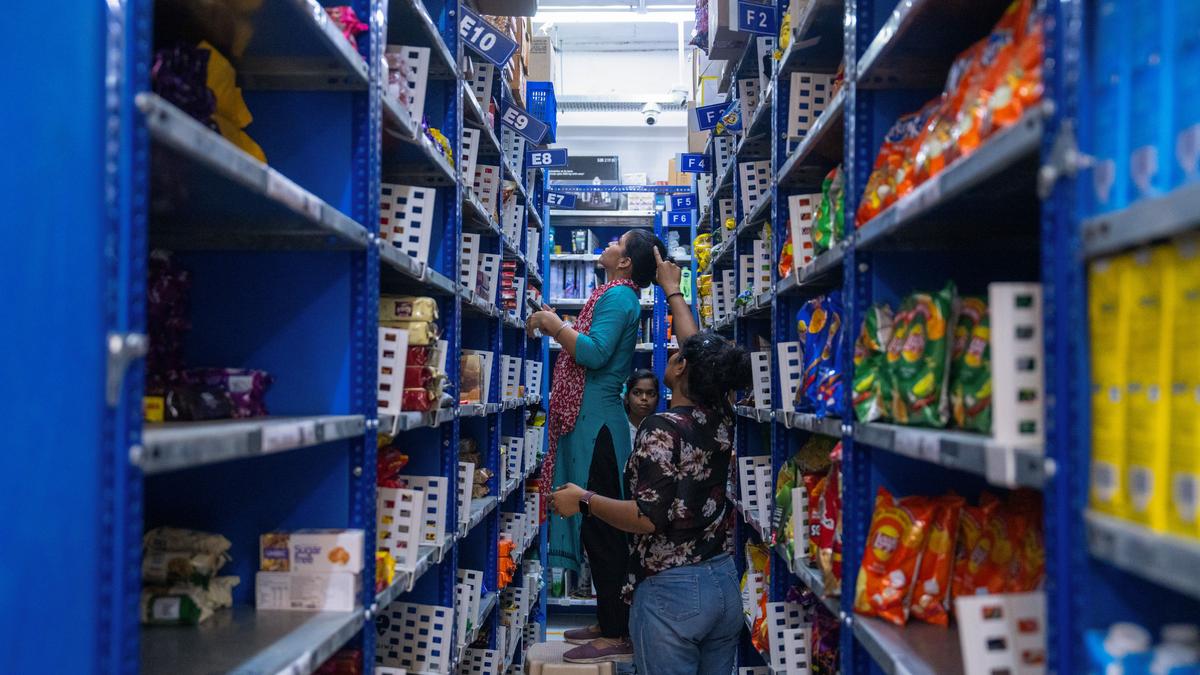
UNIQUE SELLING POINT: The dark stores of Swiggy’s quick-commerce platform Instamart averaged 1,000 orders a day
| Photo Credit:
Abeer Khan
As more and more customers look for 10- to 15-minute delivery of their daily needs, quick commerce companies such as Swiggy and Zippee have doubled the number of their dark stores — micro warehousing units of 3,000-8,000 sq ft.
Swiggy’s quick delivery platform Instamart increased the number of its dark stores to 1,021 at the end of March 31, from 523 a year ago. It added 316 stores in the March quarter alone. The average number of daily orders per dark store exceeded 1,000, the company says in a letter written to shareholders for the fourth quarter.
Blinkit, the Q-commerce platform of Eternal Ltd (formerly Zomato), added 294 new stores in the fourth quarter of FY25, its biggest ever quarterly expansion. It targets having 2,000 stores by the third quarter of FY26, a year earlier than its previous guidance, according to Motilal Oswal Research. The company’s management stated that with intensifying competition in the sector, further expansion and investments are expected. It emphasised a continued focus on market share gains, even if it meant prioritising growth over short-term profitability, the research firm said.
New entrant Zippee has more than doubled the number of its dark stores to 80 in FY25, from 35 in the previous fiscal.
Demand addition
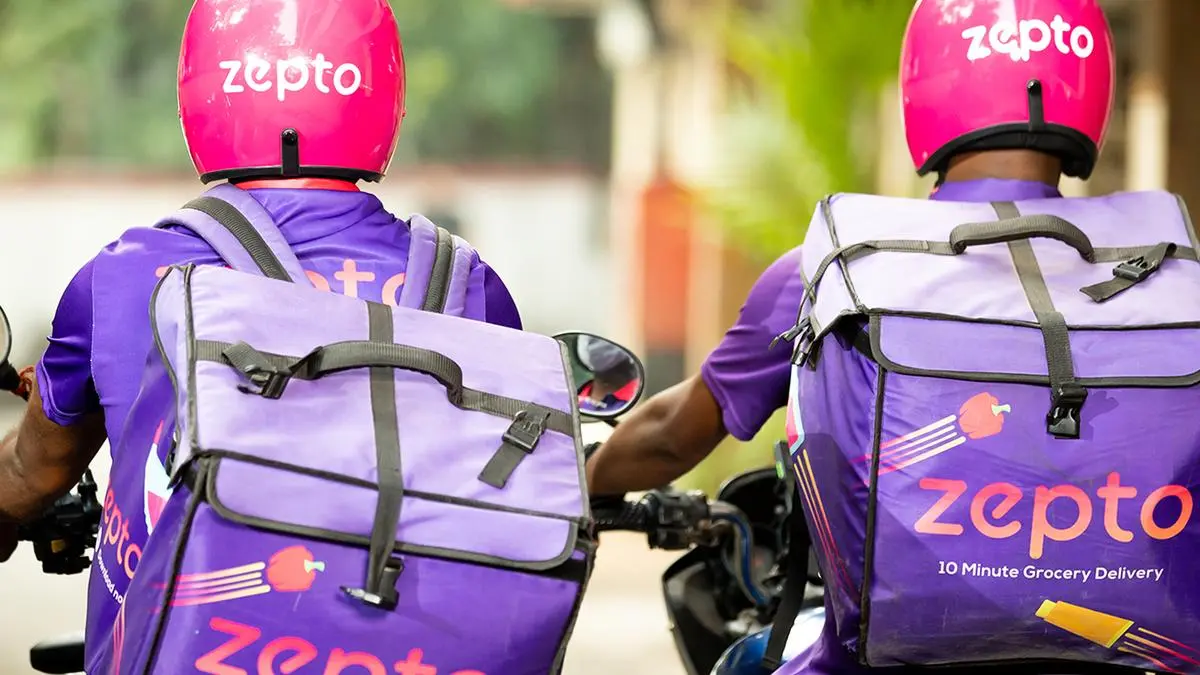
In the last two years, Zepto has significantly ramped up its dark store count, said its Chief Growth Officer, Divesh Sawhney. Quick commerce today is no longer just about convenience but has also become deeply embedded in consumer lifestyles. Whether it’s for festivals or everyday needs, consumers now expect real-time access to products across categories. The strong adoption seen in newer segments like beauty and electronics is a clear indicator of how fast this space is evolving, he added.
“We concluded a phase of active expansion towards the end of FY24, bringing our network to over 900 dark stores — a number that has remained stable through FY25 year-to-date. The focus now is on driving depth and efficiency within this footprint,” he told businessline.
On the need to expand the dark store network, Sawhney said initially the density was concentrated around metro hubs. However, the company saw a clear opportunity in Tier 2 and emerging cities, where consumers were underserved, especially in terms of assortment. The response validated this strategy in markets like Ahmedabad, Indore, and Chandigarh, where stores scaled up to 1,000 orders a day within a few weeks of launch — something that typically took months even in mature metros like Delhi, Mumbai, or Bengaluru, he said.
Storage ecosystem
Companies like Godrej Enterprises are also cashing in on the spurt in dark stores. Vikas Choudaha, Business Head, Storage Solutions Business of Godrej Enterprises Group, recently said in a release that with over 10 million sq ft of mother hubs projected to be added by new-age startups and existing e-commerce players in the next 2-3 years, and more than 3,000 dark stores expected to power the quick commerce boom by next year, there is a growing demand for agile, high-efficiency storage solutions. As India races towards faster delivery timelines, it becomes critical to transform the entire storage and distribution ecosystem, he said.
Vimal Nadar, National Director and Head-Research at Colliers India, explained that Q-commerce and hyperlocal deliveries have complex supply chain requirements, and this has driven the growth of dark stores across major Indian cities. Within cities, the understanding of consumer demand patterns has been pivotal in the notable growth of dark stores in select localities, including residential neighbourhoods.
Dark stores and fulfilment centres are likely to bolster the demand for grade A warehouses in the next few years, he said. In fact, e-commerce companies with an edge in Tier I cities are looking to replicate the success of hyperlocal deliveries and dark stores in emerging Tier-II/ III markets such as Bhopal, Coimbatore, Indore, Nashik, Surat and Visakhapatnam, he added.
According to R Sathyanarayanan, Associate Professor of Marketing, IFMR Graduate School of Business, Krea University, dark stores are critical last-mile hubs in the quick commerce supply chain. When the Q-commerce platform promises 5- to 10-minute door delivery, it needs a last-mile, micro-fulfilment warehouse point within a 3 km radius to logistically fulfil that promise to the customer, which is the primary differentiating factor for this retail service amidst traditional brick-and-mortar kirana shops and modern trade physical outlets, he said.
More Like This
Published on July 14, 2025







































































Leave a Reply