


India’s new online gaming legislation presents a stark dichotomy — victory for video games and e-sports sectors but loss for the real money gaming (RMG) industry.
This regulatory shift addresses years of flux between different gaming categories that had created market confusion and investor uncertainty. The Centre’s decision to ban real money gaming is also set to impact start-ups and millions of gamers. What does this mean for the future of gaming in India? Where do new opportunities lie for gamers, developers and entrepreneurs?
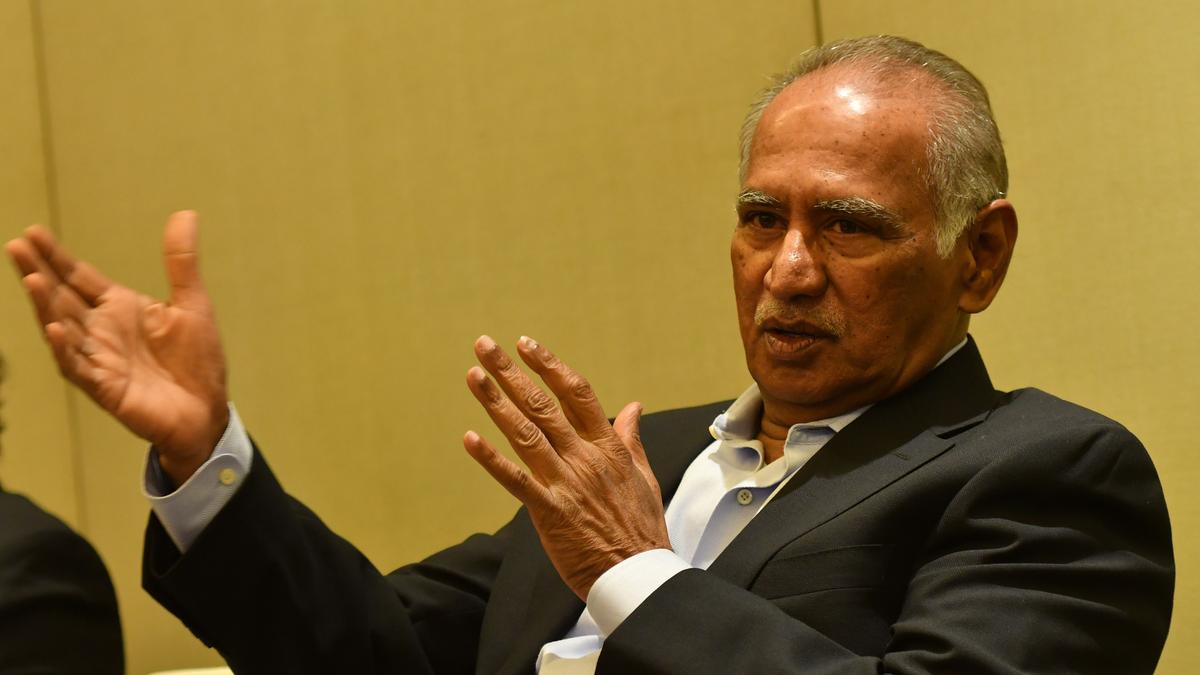
To decode the new bill and examine its impact, Harish Chengaiah, Founder, Game Director & Producer at Outlier Games, and Rohit Kumar, Founding Partner at The Quantum Hub, joined the ‘Level Up or Game Over? Decoding India’s gaming Industry post RMG ban’, a webinar organised by businessline. The session was moderated by Sindhu Hariharan, Chief of Bureau – Chennai.
During the interaction, Chengaiah described the legislation as a boon for India’s video games and e-sports industry but “game over” for the RMG industry. Despite job losses, he anticipated the new law to act as a “net positive” for video gaming and e-sports in the long term. He pointed out that the global video games industry generates about $200 billion annually, exceeding combined revenues from movies, streaming, books and sports. India’s nascent $1-billion market shows fastest-in-the-world growth rates, transitioning from free-to-play mobile gaming toward premium PC and console experiences.
Gaming investments
Chengaiah pointed out that investment patterns differ significantly between sectors. While venture capitalists fuelled RMG growth, video games focused on entertainment industry models with publisher-based project financing without equity stakes. This protects video games from investor sentiment shocks affecting RMG companies.
He suggested that the legislation could use the globally-recognised term “video games” over “social games” to avoid confusion for international publishers and investors. Social games specifically refer to multiplayer interactions, excluding single-player experiences that constitute a significant portion of the industry.
Market disruption
Kumar said that the government, by passing this regulation, has moved “too far out and too quickly without adequate consultation.” Earlier, in the run-up to elections, the Prime Minister was also talking about the gaming sector, and that the FDI should come in. So, even though there were concerns about harms, the gaming industry thought that it’s a matter of getting regulated, not an outright ban, he said.
“They sent a very wrong signal to the industry and to the investors that they can flip the switch in a minute. That really turns your reputation as a predictable investment destination, especially when so much investment and money is at stake,” he added.
Challenges with gaming
Both speakers agreed that the gaming industry’s regulatory journey has been fraught with complexities, right from the very categorisation of games of skill (Central jurisdiction) and games of chance (State jurisdiction). The landmark Chamarbaghwala vs Union of India case established India’s unique skill-versus-chance doctrine, unlike global standards. However, the absence of statistical models to definitively classify games created persistent legal gray areas.
Implementation
Experts agreed that a blanket ban regulation is likely to come with certain hurdles in implementation, particularly, setting up an age-rating content classification mechanism for video games. Chengaiah argued that the government’s consideration of India-specific age-rating systems could further complicate international distribution, again discouraging global publishers from the Indian market. He, instead, encouraged the government to embrace the existing International Age Rating Coalition (IARC) system that already provides content classification.
Further, he said, “The government can do two awareness campaigns. One should focus on what are these labels, International Age Rating Coalition (IARC) ratings, how do you identify them on the product listing page, what does it mean, etc., for informed choices. The second is parental controls like a watered-down version of OTT’s parental controls. If you see in video games, let’s say whether it is PC, console or mobile, it is very watertight.”
Future concerns
While the blanket ban on RMG addresses regulatory concerns, it risks pushing users toward illegal offshore platforms that are harder to monitor and block, speakers said. The sudden policy shift, despite government participation in gaming summits and pro-industry statements, signals unpredictable regulatory behaviour that could affect broader investment confidence in Indian start-ups, they added.
The legislation successfully segregates video games and e-sports from RMG, removing years of negative perception transfer. However, experts said that implementation details will determine whether the promotion of video gaming will translate into meaningful industry growth.
To view the full webinar, visit: https://www.thehindubusinessline.com/premium/subscriber-events/
Published on August 26, 2025
































































































































































Leave a Reply