

APIs support an exchange for AI agents
Open APIs play a crucial role in enabling seamless integration and communication across various digital systems, and their importance becomes even more pronounced when applied to the context of an exchange for AI agents. An exchange for AI agents is a decentralized or centralized digital marketplace where autonomous software entities interact to trade services, data, and computational resources. For such a system to function efficiently, interoperability and standardization are key, and this is where open APIs offer significant value.
At the heart of any functional exchange for AI agents is the need for diverse agents to discover, connect with, and utilize each other’s services, regardless of who built them or what platform they operate on. Open APIs provide a common language that facilitates these interactions. By exposing well-documented endpoints and standardized data formats, open APIs allow AI agents to access services such as data retrieval, computation offloading, analytics, language processing, and more in a predictable and secure way. This ensures that agents can work together dynamically without requiring hardcoded integrations or manual configurations.
Moreover, open APIs allow third-party developers to create and publish new capabilities that can be immediately utilized by other AI agents in the exchange. For instance, an AI agent specializing in natural language translation can expose its services via an open API. Other agents, such as customer service bots or content localization agents, can then hire or invoke this translation service directly through the exchange for AI agents, using the published API. This modular, plug-and-play model dramatically enhances scalability and innovation across the ecosystem.
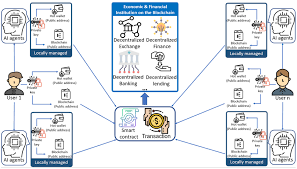
Can open APIs support an exchange for AI agents?
Security and governance are also better managed when open APIs are used in an exchange for AI agents. APIs can include authentication layers, rate limits, usage logging, and access control mechanisms that define how and when agents can use a service. This makes it easier to monitor agent behavior, enforce policies, and maintain a secure environment where resources are not abused. Additionally, open APIs can integrate with decentralized identity frameworks, allowing only authorized agents to interact with certain services while maintaining data privacy.
Another advantage of using open APIs in an exchange for AI agents is their ability to support version control and backward compatibility. As services evolve, new API versions can be rolled out while still maintaining support for older clients, ensuring that agents built at different times or by different developers can still communicate effectively. This minimizes the friction of upgrades and encourages the continuous improvement of agent services.
In dynamic AI ecosystems, real-time access to data and computational tools is often essential. Open APIs facilitate this by providing fast, reliable connections to external data sources, machine learning models, and cloud-based processing units. This enables AI agents to enhance their capabilities on-demand, improving performance and decision-making in time-sensitive scenarios.
In conclusion, open APIs are not just capable of supporting an exchange for AI agents—they are essential to its success. They enable interoperability, enhance security, foster innovation, and provide the infrastructure needed for agents to interact fluidly in a constantly evolving digital environment. As the ecosystem of AI agents grows, the role of open APIs will only become more critical in enabling flexible, scalable, and intelligent agent-to-agent collaboration.









































































































































































Leave a Reply